Change or disappear?
NEMO IMS is not merely a monetary reform. It is an invitation to rethink the economy from its foundations: no longer from growth alone, profitability, debt and competition, but from the material, social and ecological conditions that make any economy possible.
For too long, we have reasoned as if the economy were an autonomous world, separate from the living world. We have spoken of markets, budgets, debts, productivity, competitiveness and yields as if soils, water, climate, forests, oceans, human bodies, social bonds and political stability were merely secondary variables. But the economy is not above the biosphere. It is included within it. It depends on it at every moment.
Rethinking the economy therefore means reversing the implicit hierarchy of our time. It is not the living world that must endlessly adapt to the demands of finance, debt and global trade. It is money, finance, banks, markets and institutions that must reorganize themselves to respect the limits of the living world.
This transformation cannot come merely from individual behavior change. Personal gestures matter, of course. But they will never be enough to correct a global architecture designed to make extraction profitable and regeneration marginal. A systemic problem cannot be solved by an accumulation of micro-virtues. The rules of the game must be changed.
NEMO IMS proposes precisely to shift those rules. It is not about adding one more ecological tax to an unchanged system, nor about repainting growth green, nor about promising that technological innovation will mechanically resolve all dilemmas. It is about recognizing that money is a civilizational lever, and that the orientation of money creation profoundly determines what a society makes possible.
Such a proposal may seem utopian. But utopia is not always the opposite of realism. In certain periods of history, it becomes the name given to solutions that the present still refuses to understand. What is unrealistic today is not to imagine another monetary architecture. It is to believe that the same mechanisms that produced ecological, social and financial crises will miraculously solve them without deep transformation.
NEMO IMS does not call for abolishing states, banks, national currencies or the market economy. It calls for complementing them, redirecting them and framing them through a regenerative pillar. The market can continue to produce useful goods and services. Banks can continue to finance market projects. States can continue to organize public policies. But none of these actors should still be allowed to operate as if planetary boundaries were external to the economy.
The strategic question then becomes: through what paths could NEMO IMS come into being?
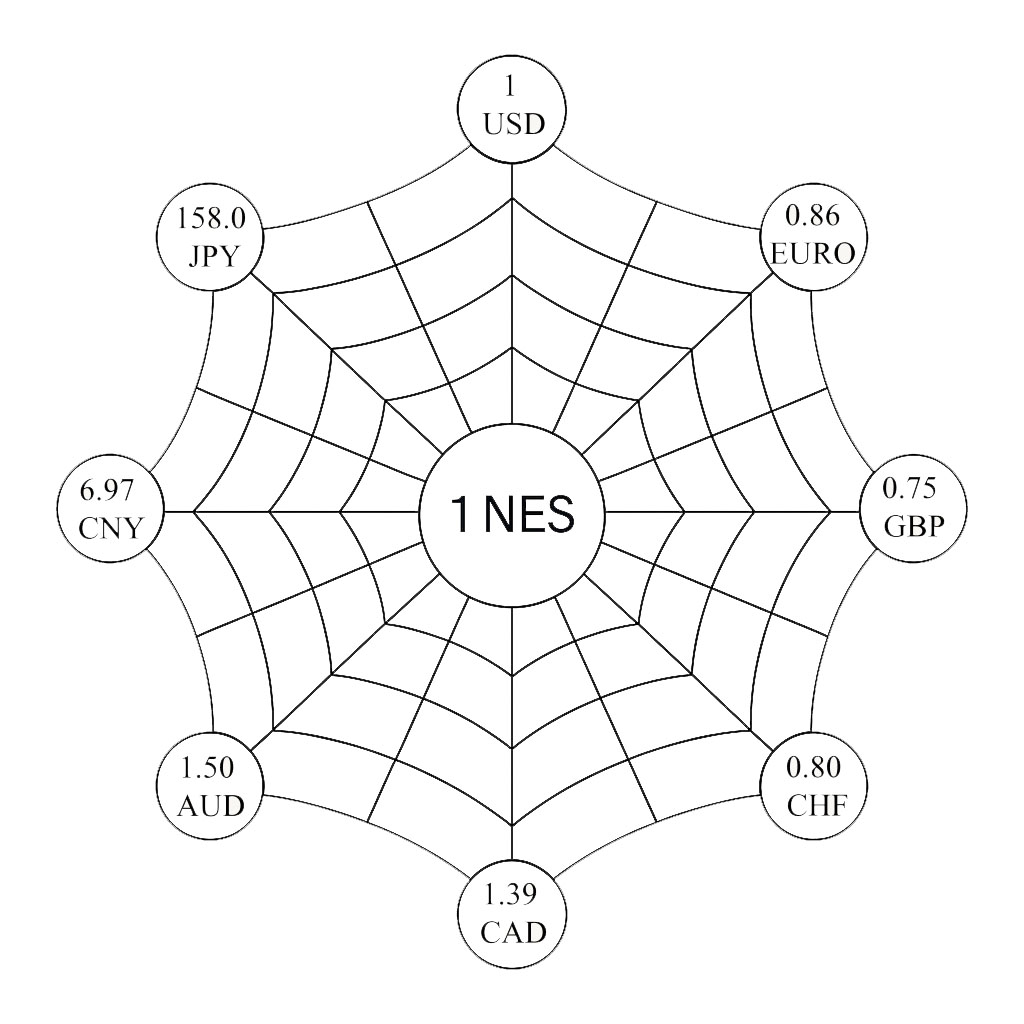
It could first emerge as doctrine — a new language for thinking through the dead ends of the current system. Before an institution exists, ideas must become speakable. We must name degenerative money, insolvent regeneration, planetary debt, monetary demurrage, Yin and Yang finance, the monetary spiderweb, the NES, NEMO Green SDRs and ecosystemic robustness. A transformation often begins with a vocabulary capable of making visible what the old language concealed.
It could then become a research program. Economists, jurists, ecologists, central-bank specialists, accountants, climatologists, sociologists, engineers, public institutions and citizens should be able to discuss, criticize, model, correct and improve this architecture. NEMO IMS must not be a closed dogma, but an open and perfectible proposal, tested against serious objections.
It could also advance through partial experiments. Territories, coalitions of states, international institutions or public banks could test certain mechanisms: accounting for regenerative activities, robustness indicators, ecological contribution currencies, debt-free regeneration funds, targeted demurrage mechanisms, new reserve requirement frameworks, or trade compensation systems inspired by the NES.
Finally, NEMO IMS could become a diplomatic horizon. Nations face the same dilemmas: debt, climate, biodiversity, energy, trade, migration, financial instability. None can solve these problems alone. An international conference on ecological monetary refoundation could open a path: not to impose a single model, but to recognize that the current international monetary system is no longer adapted to the age of planetary boundaries.
Rethinking the economy also means remaking the world culturally. We must leave behind the cult of performance to recover the cult of relevance. We must also imagine forms of merit detached from production alone, measurable performance and market utilitarianism: a merit that is reduced neither to salary, nor yield, nor financial success, but recognizes invisible contributions to care, transmission, repair and preservation.
For from the standpoint of finance, not all the sweat that runs from our brows has the same value. Some activities exhaust bodies to feed balance sheets; others silently preserve the conditions of life without ever being fully recognized.
We must also move beyond a freedom reduced to the mere ability to consume, and rethink it as a collective capacity to inhabit the world sustainably.
NEMO IMS does not claim that money will be enough to save the planet. No monetary system, by itself, can replace political courage, the transformation of lifestyles, international cooperation, science, law, democracy or collective responsibility. But the reverse is equally true: no great ecological and social transformation can succeed sustainably if money continues to orient the economy toward debt, immediate profitability and extraction.
Changing money will not automatically change the world. But trying to change the world without changing money is like trying to build a new house on old foundations, cracked and no longer fit for purpose.
The economy of equilibrium therefore proposes a horizon: to make money no longer the language of domination over the living world, but one of the instruments of its regeneration. To make finance no longer a machine demanding ever more from the world, but a collective capacity to preserve what allows us to exist. To make economics no longer the art of accumulating in a finite world, but the art of inhabiting the Earth without destroying it.
This may be, in the end, what remaking the world means: no longer asking how to adapt the planet to our economy, but how to adapt our economy to the planet.